30.3.16

Aravind Adiga's THE WHITE TIGER

A STUDY


by: Sudhir K. Arora


ISBN 978-81-7977-565-3

pp.: 194 + xiv

Price : Rs. 110.00 (for students)
         : Rs. 225.00 (for institutes and libraries)


Aravind Adiga’s The White Tiger is the most controversial Booker Prize novel. It is often rejected as “trash” or “raddi” because of its savage mutilation of Indian cultural ethos and the hurt of the national pride. It is also hailed as the masterpiece for its fascinating narration of two Indias. It offers a commentary on Indian life though, to some critics, this commentary seems to be inauthentic and lacking in truth.
      As The White Tiger is prescribed in the syllabus of some universities, the contents of this book are designed to cater to the needs of the students. What makes this book interesting is its simple language and lucid style. It will be useful in developing the keen insight of the students as well as the scholars who are sure to explore the unexplored regions of Aravind Adiga’s The White Tiger and other novels as well.

Sudhir K. Arora (1968) teaches English at Maharaja Harishchandra P.G. College, Moradabad, affiliated to M.J.P. Rohilkhand University, Bareilly. He has authored a number of books including Aravind Adiga’s The White Tiger: A Freakish Booker and Multicultural Consciousness in the Novels of Kamala Markandaya. The voluminous critical work, Cultural and Philosophical Reflections in Indian Poetry in English in five volumes, is his magnum opus.


List of Contents:


Indian Novel in English: A Tour
Aravind Adiga as a Novelist
The White Tiger: In Brief
The White Tiger: Chapter-wise Summary
The White Tiger: Some Viewpoints
(a)Title (b) Plot (c) Characterization (d) Multiple Themes (Struggle for Identity, Light versus Darkness, Mockery of Religion, How to break the Cage, Failure of Democracy, Sex for Sale, Effects of Globalization, Relationship—Master-servant Relationship, Servant-servant Relationship, Personal Relationship, Employer-employee Relationship, Indo-China Relationship) (e) Technical Aspects             
Balram Halwai: The White Tiger
Theme of Poverty in The White Tiger
Religion in The White Tiger
Mockery in The White Tiger
Democratic Values and The White Tiger
Postmodern Reflections in The White Tiger
Foucault, Korzybski and The White Tiger
Memorable Excerpts from Aravind Adiga’s Works
Memorable Facts: Adiga and His Works
Scholars on Aravind Adiga’s The White Tiger
Aravind Adiga’s The White Tiger in Reviews


A.K. RAMANUJAN: The Bridge between Tradition and Modernity

A Study of the Poet and his Poetry


by : Dushyant Nimavat


ISBN 978-81-7977-566-0

pp.: 130 + vi

Price : Rs. 75.00 (for students)
         : Rs. 130.00 (for Institutes and Libraries)


List of Contents:

A.K. Ramanujan—Life and Works
A.K. Ramanujan’s Major Works
Characteristics of Ramanujan’s Poetry
Major Themes of Ramanujan’s Poetry
Reconciliation Between Tradition and Modernity in Ramanujan.s Poetry
Historical Sensibility in Ramanujan’s Poetry
Imagery and Symbolism in Ramanujan’s Poetry
Irony in Ramanujan’s Poetry
Ramanujan’s Poetic Craftsmanship
Indian Experience in Ramanujan’s Poetry Or Indian Sensibility in A.K. Ramanujan’s Poetry
Depiction of Familial Relationships in Ramanujan’s Poetry
A.K. Ramanujan’s Treatment of Nature
Ramanujan’s Views on Folklore and its importance
A.K. Ramanujan’s Attitude towards Women              
Ramanujan’s Views on Poetry and Folklore
The Use of Mythology and Legends in A.K. Ramanujan’s Poetry
The voice of Protest in the Poems of A.K. Ramanujan
Memory, the Central Theme of A.K. Ramanujan’s poetry
Ramanujan’s Poetic Credo
Ramanujan on Bhakti Poetry
Critical Appreciation of A.K. Ramanujan’s Selected Poems
A River
Breaded Fish
Love Poem for a Wife I.
The Snakes
Obituary
The Striders
Of Mothers Among Other Things
Looking for a Cousin on a Swing              
Still Another view of Grace.
The Hindoo : He reads his Gita and is calm at all events
Conventions of Despair
History              
Small Scale Reflections on a Great House
The Last of the Princes              
Anxiety              
Self-Portrait
Prayers to Lord Murugan              
Elements of Composition              
Zoo Gardens Revisited
Chicago Zen
Waterfalls in a Bank
On the Death of a Poem
Moulting
Theme and Essence of A.K. Ramanujan’s Major Poems (Brief Summary)
A.K. Ramanujan’s Life & Works at a Glance
Hints to Objective & Short Answer Questions. (Easy to Remember Points)
Objective Questions (Multiple Choice Questions)
Bibliography

16.2.16

A Handbook of the Study of Literature

Studies in 

Literary Forms, Literary Movements & Practical Criticism


by
Manindranath Sinha


ISBN 81-7977-182-2
pp. : 320 + xvi
Price : RS. 125.00 (for students)
         : RS. 250.00 (for institutes and libraries)

Also useful for Uttar Pradesh PSC, Assistant Teacher (Trained Graduate Grade Men/Women Branch) Examination 2018

also available at amazon.in

List of Contents:


Introductory

What is Literature? Methods of Sdudying Literature.

The Study of Poetry

What is Poetry ? 
Subjective and Objective Poetry. 
The Lyric : (A) What is the Lyric? Main Features of the Lyric, Range of Lyric, (B) Fusion of the Personal and the Universal Elements in Lyrics
The Ode: Main Features of the Ode-The Forms of the Ode
The Elegy : Essential Qualities of an Elegy as a Poetic Form—the Pastoral Elegy
The Sonnet
The Ballad : Distinguishing Features—Types of Ballad
The Epic : The Qualities of an Epic—The conventions of the Epic—Kinds of Epic- Mock Epic. 
Dramatic Monologue. 
Stanza Forms : (A) Heroic Couplet, (B) The Spenserian Stanza (C) The Chaucerian Stanza, (D) The Terza Rima, (E) The Ottava Rima, (F) Ballad Stanza, (G) Sextain
Metre : Its Place and Use in Poetry—Kinds of Metre : (A) Disyllabic Metre, (B) Trisyllabic Metre.

The Study of Drama

The Novel and the Drama
The Dependence of the Drama upon the Stage
The Structure of a Play
Parallelism and Contrast
Concealment and Surprise
Soliloquy and Aside
The Three Unities.

The Study of Tragedy

Tragedy Defined : (A) Introduction, (B) The Functions of Tragedy : (a) Excitation of Pity and Fear, (b) Katharsis, (C) The Presentation of a Vision of Grandeur and Greatness (d) Social Significance. 
The Role of Fate in Tragedy
Character is Destiny
Conflict in Tragedy
The Supernatural in Tragedy
The Tragic Hero
Relative Importance of Plot and Character in Tragedy
Tragic Relief (Tragic Pleasure)
Universality in Tragedy
Dramatic Irony
The Chorus
More Important Types of Tragic Drama : (A) Greek Tragedy, (B) Romantic Tragedy, (C) Domestic Tragedy, XIII. Difference between Romantic Tragedy and Neo-classical Tragedy.

The Study of Comedy

Comedy Defined : (a) Essential Features of Comedy, (b) The Sources of the Comic, (c) Drama and Comedy
The Relative importance of plot and Character in Comedy
Important Types of Comedy: (A) The Romantic Comedy, (b) The Comedy of Humours (Comedy of Satire)
Difference between Classical Comedy and Romantic Comedy
Some Other Dramatic Types : (A) Tragi-Comedy, (B) Farce, (C) Melodrama, (D) The Masque, (E) The problem play.

Origin and Development of English Drama

The Study of Shakespeare

Shakespearean Comedy
Shakespearean Tragedy
The Last plays of Shakespeare
Shakespeare’s Historical Plays : (A) English Historical plays, (B) The Roman Plays.

The Study fo Novel

Novel Defined
The Story-telling Aspect of the Novel
The Principle of Fidelity in a Novel
Plot : (a) Loose and Organic, (b) Simple and Compound. 
Characterization
Relative Importance of plot and Character
Dialogue in a Novel
Interpretation or Criticism of Life
Some important Types of the Novel : (A) The picaresque Novel, (B) The Historical Novel, (C) The Autobiographical Novel, (D) The Psychological Novel. (E) The Stream of Consciousness Novel.

The English Novel

Its Beginnings
The English Novel in the 18th century.

Other Literary Forms

The Criticism
The Satire
Biography
Autobiography
The Short Story
The One-Act play
The Essay
Poetic Drama
Style-Definition—Style as the Index of personality.

The Renaissance

The Renaissance-its definition and its impact on society
Impact of the Renaissance on English Literature : Influence on poetry, Impact on Drama, Impact on prose. 
Renaissance & English poetry : (A) Elizabethan Sonnets & Sonneteers,(B) Elizabethan Songs and Lyrics, (C) Renaissance and Epic poetry : Edmund Spenser, (D) Long, Narrative poetry of the Elizabethan Age (Erotic Poetry).
University Wits-their Contribution to Drama
Individual Contribution of the University Wits: (1) John Lyly (2) Robert Greene (3) Thomas Kyd (4) Marlowe (5) George Peele. 
Elizabethan Revenge Tragedy
Elizabethan Prose : (A) Prose Fiction, (B) Philosophical Prose.

The Metaphysical Poetry

Neo-Classicism

Neo-Classicism : (A) Introduction, (B) Distinctive Features of Neo-Classical Literature 
Characteristics of Neo-Classical poetry
Dryden : (A) Dryden as a Neo-Classicist. (B) Dryden as a Satirist.
The Comedy of Manners
The Sentimental Comedy
Heroic Drama
Verse-Satirists of the Neo-Classical Period : (1) Verse-Satirists of the Restoration period, (2) Verse Satirists in the 18th Century. 
Periodical Essay in the 18th Century : (A) Reasons for the popularity, (B) The periodical Essay of the 18th century.

The Romanticism

Introduction
Preparation for the Romantic Movement
Romanticism as a revolt
Romanticism as Renascence of Wonder
Romanticism as a “Return to Nature”.
Medievalism in Romantic poetry
The French Revolution and Romanticism
Some Characteristics of Romantic poetry.

The Pre-Raphaelite Poetry


Practical Criticism

Critical Evaluation/ Appreciation of passages in Verse/Prose]. I. Introduction. II. Critical Evaluation of Verse-passages. III. Critical Evaluation of prose passages. Exercise.

Solved University Questions

1. “A story of exceptional calamity leading to the death of a man in high state”. Can this definition be applied to modern tragedy? Give reasons for your answer. 
2. In what sense can a tragedy be said to be “true to life”? 
3. "Tragedy is to say a certain story/Of him that stood in great prosperity/And is fallen out of high degree/Into misery and endeth wretchedly" Is this an adequate definition of tragedy? 
4. “The tragic hero’s destiny or choice is to go down fighting rather than submit and thus to pluck a moral victory from a physical defeat.” Discuss with appropriate examples. 
5. What is tragic pity? Explain with illustrations from the plays you have read.
6. Why do we enjoy reading tragedy which is basically a spectacle of human suffering? or why does tragedy please? 
7. Discuss the nature of the tragic effect. 
8. Comment on the interplay between Freewill and predestination in Tragedy. 
9. What, in your view, is more important in Tragedy--plot or character? Discuss with reference to some typical tragedies. 
10. Consider the terms “Romantic” and “Classical” in relation to Tragedy. 
11. How is modern tragedy different from Elizabethan tragedy? Discuss with illustrative references. 
12. How is Elizabethan tragedy different from Greek tragedy?
13. What do you understand by (I) tragic flaw, (II) dramatic irony, (III) comic relief. 
14. Write a note on the tragic hero. 
15. What is Dramatic Irony and what is its use in tragic drama ? 
16. Elizabethan tragedy sharply differs from Classical tragedy. Do you agree? 
17. “Tragedy would not be tragedy if it were not a painful mystery.” How far can tragic experience be explained in terms of pain and mystery. 
18. In what ways are comedy of Humours and Comedy of Manners apart? 
19. Do you agree with the view that laughter is the ultimate aim of comedy? Justify your answer. 
20. “Incongruity is the very soul of comedy.” Discuss.


Andrew Marvell : TO HIS COY MISTRESS

with Introduction, Text and Notes


by
S.P. Sen Gupta
S.C. Mundhra


ISBN 978-81-7977-563-9

pp. : 128 + viii

Price : Rs. 95.00


List of Contents :

Background : The Metaphysicals and Their Age
Andrew Marvell—His Life and Works
Andrew Marvell as a Poet
The Metaphysical Poetry and Marvell
Themes in Marvell’s Poetry
Style
The Poetry of Andrew Marvell : An Assessment
Select Literary Criticism
To His Coy Mistress
Introduction to the Poem
Analysis of the three verse-paragraphs
Summary of the poem
A Critical Appreciation
A famous love poem
‘Carpe Diem’ theme
Classical Theme
Tone and Movement
Expression of varying moods
Conceits and use of wit
The syllogistic construction of the poem
Metre
Text
Notes and Comments
Select Bibliography

10.2.16

Premchand : GODAAN

A Critical Analysis


by
I.D. Sharma


ISBN 978-81-7977-564-6

pp. : 146 + vi

Price : Rs. 65.00


Also available at amazon


List of Contents :


LIFE AND WORKS OF PREMCHAND
AN INTRODUCTION TO THE NOVEL
THE BACKGROUND OF INDO-ANGLIAN LITERATURE
THE SUMMARY AND ANALYSIS OF ‘GODAN’
PRENCHAND : THE MAN OF HIS AGE
THE IMPACT OF PSYCHOLOGY ON HINDI NOVEL
LEADING THEMES IN ‘GODAN’
ISSUES OF LOVE AND MORALITY IN ‘GODAN’
FAMILY, SOCIETY AND RELATIONSHIPS IN ‘GODAN’
REALISM AND SYMBOLISM IN ‘GODAN’
ANTI-BRAHMIN ATTITUDE OF PREMCHAND
THE TREATMENT OF WOMEN CHARACTRES IN ‘GODAN’
CHARACTERIZATION IN ‘GODAN’
‘GODAN’ AS AN EPIC IN NOVEL
SOCIAL CONCERN AS A THEME IN PREMCHAND’S NOVELS
VISION OF PREMCHAND
CHARACTER SKETCHES
QUOTABLE QUOTES FROM ‘GODAN’
SELECTED QUESTIONS
SOME SOLVED TEXTUAL PROBLEMS
DISCUSS PREM CHAND AS A PROGRESSIVE WRITER.
WRITE A DETAILED NOTE ON THE LEADING THEME OF GODAAN.
WRITE A NOTE ON THE THEME OF LOVE.
DISCUSS SOCIAL ISSUES AND SOCIAL MORALITY IN GODDAN.
THE INDICTMENT OF BRAHMANISM IS PUNGENT IN GODAAN. DISCUSS.
WRITE A NOTE ON WOMEN CHARACTERS IN GODAAN.
DISCUSS GODAAN AS AN EPIC IN PROSE.
COMMENT ON SOME MEMORABLE AND DRAMATIC SITUATION IN GODAAN.
SUGGESTED READINGS

Rabindranath Tagore : GITANJALI

Text with Critical Study and Notes


by
Som Dev
B.C. Chakravorty


ISBN 81-7977-071-0

pp. : 312 + vi

Price : Rs. 240


List of Contents :


TEXT OF GITANJALI
HINDI PROSE TRANSLATION OF GITANJALI
RABINDRANATH TAGORE—HIS LIFE, FAMILY BACKGROUND PERSONALITY AND FORMATIVE INFLUENCES
RABINDRANATH TAGORE : HIS POETICAL DEVELOPMENTRABINDRANATH TAGORE : HIS POETIC CAREER
RABINDRANATH TAGORE : CHARACTERISTICS AS A POET
RABINDRANATH TAGORE : HIS CONTRIBUTION TO INDIAN POETRY IN ENGLISH
TAGORE : HIS LIFE AND WORKS
THE MEANING OF MYSTICISM
TAGORE AND WALT WHITMAN: TWO MYSTICS
SOME WESTERN MYSTIC POETS
TAGORE AND AUROBINDO
TAGORE AND SAROJINI NAIDU
‘GITANJALI’ : AN INTRODUCTION
‘GITANJALI’ : ITS THEME,
‘GITANJALI’ :A CRITICAL APPRECIATION
‘GITANJALI’ : ITS SYMBOLISM
‘GITANJALI’ : ITS STYLE
‘GITANJALI’: GOD AND THE POET
‘GITANJALI’: THE CONCEPT OF LIFE
‘GITANJALI’: THE CONCEPT OF DEATH
‘GITANJALI’: A METAPHYSICAL POEM
‘GITANJALI’ : ITS MYSTICISM
‘GITANJALI’: A STUDY OF ITS POEMS
‘GITANJALI’’: ITS PHASES
‘GITANJALI’ : IMPORTANT EXPLANATIONS AND WORD MEANINGS
CRITICAL EXTRACTS
QUESTIONS AND ANSWERS
SELECT BIBLIOGRAPHY

9.2.16

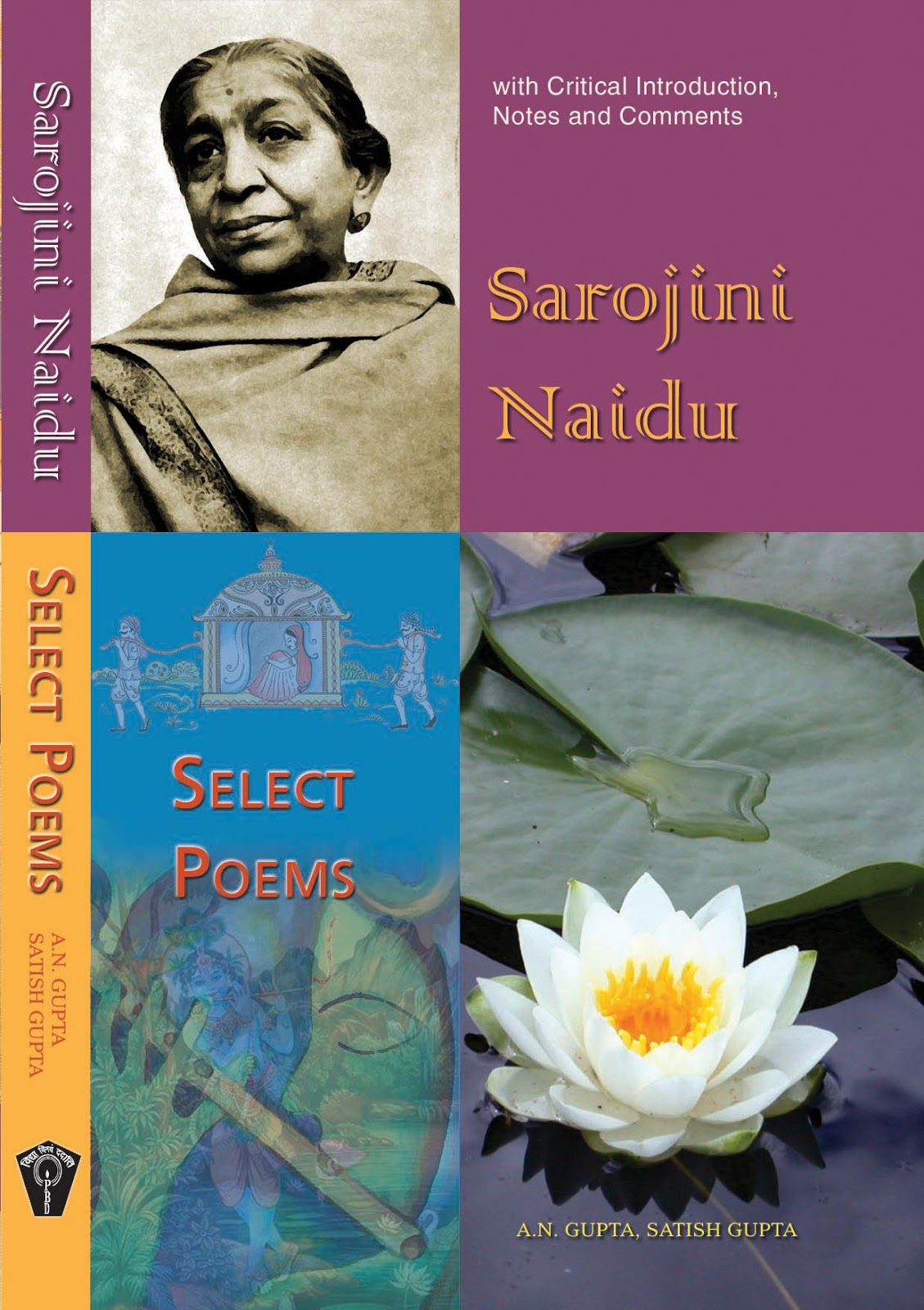
SAROJINI NAIDU : Select Poems

with Critical Introduction, Notes and Comments


by
A.N. Gupta
Satish Gupta


ISBN 978-81-7977-558-5

pp. : 330 + vi

Price : 280.00

List of Contents :

Sarojini Naidu : A Biographical Sketch

Sarojini Naidu : Her Poetic Career
Her Poetical Works, Development of her Poetic Art

Sarojini Naidu : The Woman
Her Personality, Her Character and Temperament

Sarojini Naidu : The Orator
Combination of Poetry and Oratory, Her Gift of Eloquence and Poetry Combined in One and the Spell it Cast

Sarojini Naidu : Her Ideals and Methods

Sarojini Naidu : Characteristic as a Poet

Sarojini Naidu : Her Literary Affiliations

Sarojini Naidu : Her Achievement and Place

Sarojini Naidu : Her Art and Diction
Formal Aspects of her Poetry, her Technique

Sarojini Naidu : Her Imagery and Symbolism

Sarojini Naidu : Themes of her Poetry

Sarojini Naidu : The Folk Theme
Her folk Songs

Sarojini Naidu : Her Treatment of Nature

Sarojini Naidu : Her Poems of Spring Time
Theme of Spring in her Poetry

Sarojini Naidu : Poems dealing with the Pageant of Indian Life
Poetry of Nationhood, Poetry of National Life

Sarojini Naidu : Poems depicting her Love for Mother India
Patriotic note in her Poetry

Sarojini Naidu : Theme of Life and Death 
Theme of Challenge of Suffering and Pain and Death to Life
Double Strain in her Poetry—Frustration, Defeat and Hope
Element of Pessimism and Optimism in her Poetry

Sarojini Naidu : As a Romantic Poet
Element of Romanticism in Sarojini Naidu’s Poetry

Sarojini Naidu : Her Poems of Love
Her Treatment of the Theme of Love

Sarojini Naidu : Her Critics
Rise and Development of Criticism on her

Select Literary Criticism of Sarojini Naidu as a Poet
1. A poet of Indian life 2. Poet as well as patriot and orator 3. Flouting of the metaphysical tradition 4. Merits and demerits of Sarojini’s poetry 5. Her reputation 6. Varied themes and lyric sweetness of her verse 7. Sarojini Naidu had the aspiration to write poetry but she lacked the equipment 8. The Indian Nightingale 9. Her genius 10. Merits and failures of Sarojini Naidu’s poetry

Sarojini Naidu : General Introduction to her Poems

Annotation of Poems

Poems of Nature 
1. A Song in Spring 2. The Coming of Spring 3. June Sunset 4. Champak Blossoms 5. Leili 6. Nasturtiums 7. Ashoka Blossom 8. Golden Cassia 9. In Praise of Gulmohur Blossoms 10. Spring 11. The Joy of the Spring-time 12. Ecstasy 13. The Call of Spring 14. The Magic of Spring 15.  Autumn Song

Poems of Love 
1. The Flute Player of Brindaban 2. A Rajput Love Song 3. Song of Radha, the Milkmaid 4. The Temple    4 (i).The Gate of Delight :  a. The Offering b. The Feast c. Ecstasy d. The Lute-Song e. If you call me  f. The Sins of Love g. The Desire of Love h. The Vision of Love 4 (ii). The Path of Tears : a. If you were dead 4 (iii). The Sanctuary: a. The Illusion of Love b. Love Omnipotent c. Love Transcendent d. The Festival of Memory e. A Love Song from the North  f. An Indian Love Song  g. A Persian Love-Song h. To  Love

Folk and Indian Scene Poems 
1. In Praise of Henna 2. Harvest Hymn 3. Vasant Panchami 4. Indian Weavers 5. The Snake-Charmer 6. Palanquin-Bearers 7. Coromandel Fishers 8. Bangle-Sellers 9. Wandering Singers 10. Corn-Grinders 11. Indian Dancers 12. Nightfall in the city of Hyderabad 13. The Pardah Nashin 14. Village Song—1 15. Village Song—II 16. Cradle-Song 17. Suttee 18. The Festival of Serpents 19. The Indian Gipsy 20. Raksha Bandhan

The Song of Life and Death
1. Love and death 2. Life 3. Death and life 4. The Fairy Isle of Janjira 5. In Salutation to the Eternal Peace 6. To a Budha Seated on a lotus 7. The royal tombs of Golconda  8. The Bird of Time  9. Transience 10. A Challenge to Fate 11. Guerdon 12. The soul’s Prayer 13. The old woman 14. The Broken Wing 15. The Wandering Beggars 16. Lakshmi the Lotus Born 17. Kali, the Mother 18. The Challenge 19. The poet to death 

Miscellaneous Poems
1. The Queen Rival 2. In Salutation to My fathers spirit 3. To my Fairy Fancies 4. Imperial Delhi 5. The Lotus 6. To India  7.Hymayun to Zobeida 8. Damayanti to Nala in the Hour of exilte 9. My dead Dream 10. ongs of Radha Kanhaya 11. Summer Woods 12. Caprise 13. Song of Radha 14. To youth 15. The Bird Sanctury 16. Awake 17. Longing 18. Farwell 19. Solitude 20. At Dawn 21. The Prayer of Islam  22. The Garden vigil 23. The Pearl 24. Three Sorrows 25. Bells 26. Memorial Verses (i) Ya Mahbub (ii) Gokhle 27. Alabaster 28.To the God of pain 29. Ode to H.H. the Nizam of Hyderabad  30. Lokmanya Tilak

Chronology of Important Dates

Bibliography